
Choy : SPIKY Artist

Mi Historia como Artista (English below)
La historia del artista es parte de la identidad del creador. En mi caso, tengo una doble condición como creador porque soy arquitecto y pintor.
Para mí, esta doble condición se funde en un mismo proceso creativo, no tengo diferenciación cuando hago una obra de arquitectura, cuando me enfrento a la complejidad de un edificio o cuando hago una pintura.
Para mí, la entrega creadora, en estas dos dimensiones del arte visual es la misma. Por un lado está la intuición en el centro del misterio de la creación artística.
Creo firmemente que la intuición es una condición humana del creador muy importante para su obra. Por otro lado, también creo que la idea o pensamiento es el germen generador de la obra, es fundamental, sea esta una pintura, un edificio o una ciudad. Si detrás de la obra no hay un concepto, un pensamiento que la haga trascender, no tendrá validez como obra de arte.
La historia de otros artistas también es importante en la vida y en la alimentación creativa de un creador. En mi caso personal, en el arte moderno de Cuba, destaco a Wifredo Lam, que fue un hombre de una dimensión universal, si hubiera pintado solamente “La jungla”, que está en el Museo de Arte Moderno de Nueva York (MOMA), hubiera sido suficiente para llegar a la posteridad. Otra cubana que me emociona, entusiasma y motiva mucho es Antonia Eiriz, una pintora expresionista de principios de la Revolución, con una obra impresionante y que, si solamente hubiera hecho “La anunciación” también hubiera llegado al olimpo del arte cubano. Desde el punto de vista internacional, soy muy admirador (casi fanático) de Edvard Munch, su pintura me sensibiliza, me impresiona, me enaltece y si solamente hubiera pintado “El grito” creo que tendría un lugar más que merecido en la historia del arte contemporáneo. Creo que no podemos dejar de mencionar a Picasso, tan polifacético, un español que trascendió a la escala planetaria con su obra; si tuviera que escoger un obra suya diría que el “Guernica” sería suficiente para catalogarlo como uno de los pintores más importantes del siglo XX.

SPIKY by Choy
En realidad esta colección es muy inspiradora.
Las espinas rodean y protegen a las flores y a algunos animales, como a los erizos, que los protegen de agresores. Las joyas también pueden nacer entre espinas, por lo tanto, esta colección de Sergio Andrés y su hija Anaïs, me pareció muy poética y sugerente. Es por eso que, de repente, me vi haciendo dos piezas para la colección.
La primera pieza, que hice casi de un tirón,
la denominé “Entre espinas flores” y se vincula al poema “A mi madre” que José Martí escribió a los diecisiete años, mientras cumplía condena en las canteras de San
Lázaro, La Habana.
El poema dice así:
Mírame, madre,
y por tu amor
no llores, si esclavo
de mi edad
y mis doctrinas
tu mártir corazón
llené de espinas,
piensa que nacen
entre espinas
flores.
Así, en esta obra, “entre espinas” nacen las
joyas, escoltadas como flores por ellas. Me las imagino en sortijas, aretes,
broches, pequeños piercings, etc.
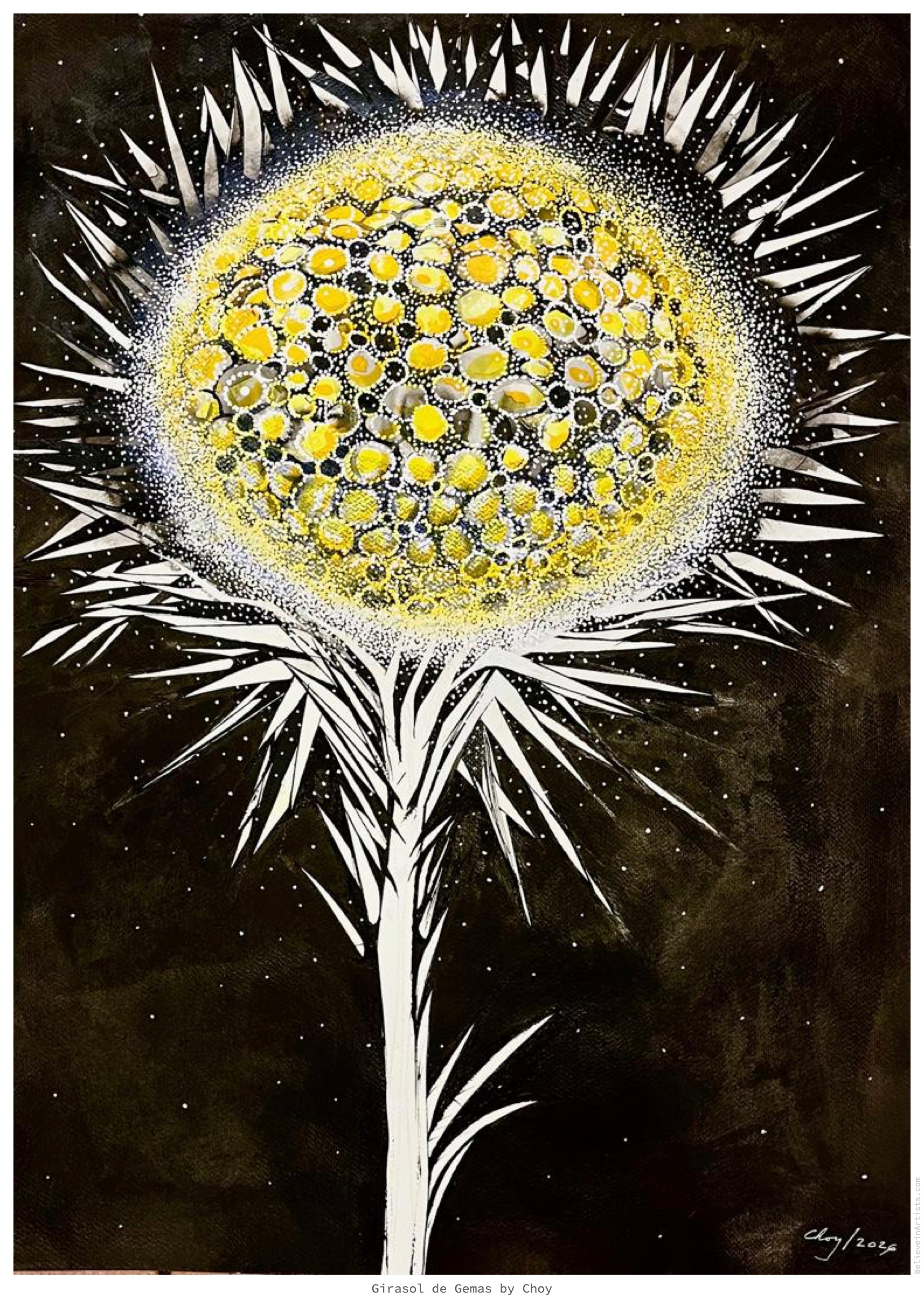
La otra obra la he denominado “Girasol de
gemas”. En ella, un girasol y su esbelto tallo, se han transformado en un nido
de joyas, protegidos por elegantes espinas que los rodean.
Hay un guiño o una mirada a los girasoles de Van Gogh que podrían dar lugar a una subserie de Spiky que yo llamaría “Espinas y girasoles”.

Sigue Creando Arte
Me gustaría compartir tres obras que no forman parte de esta colección:
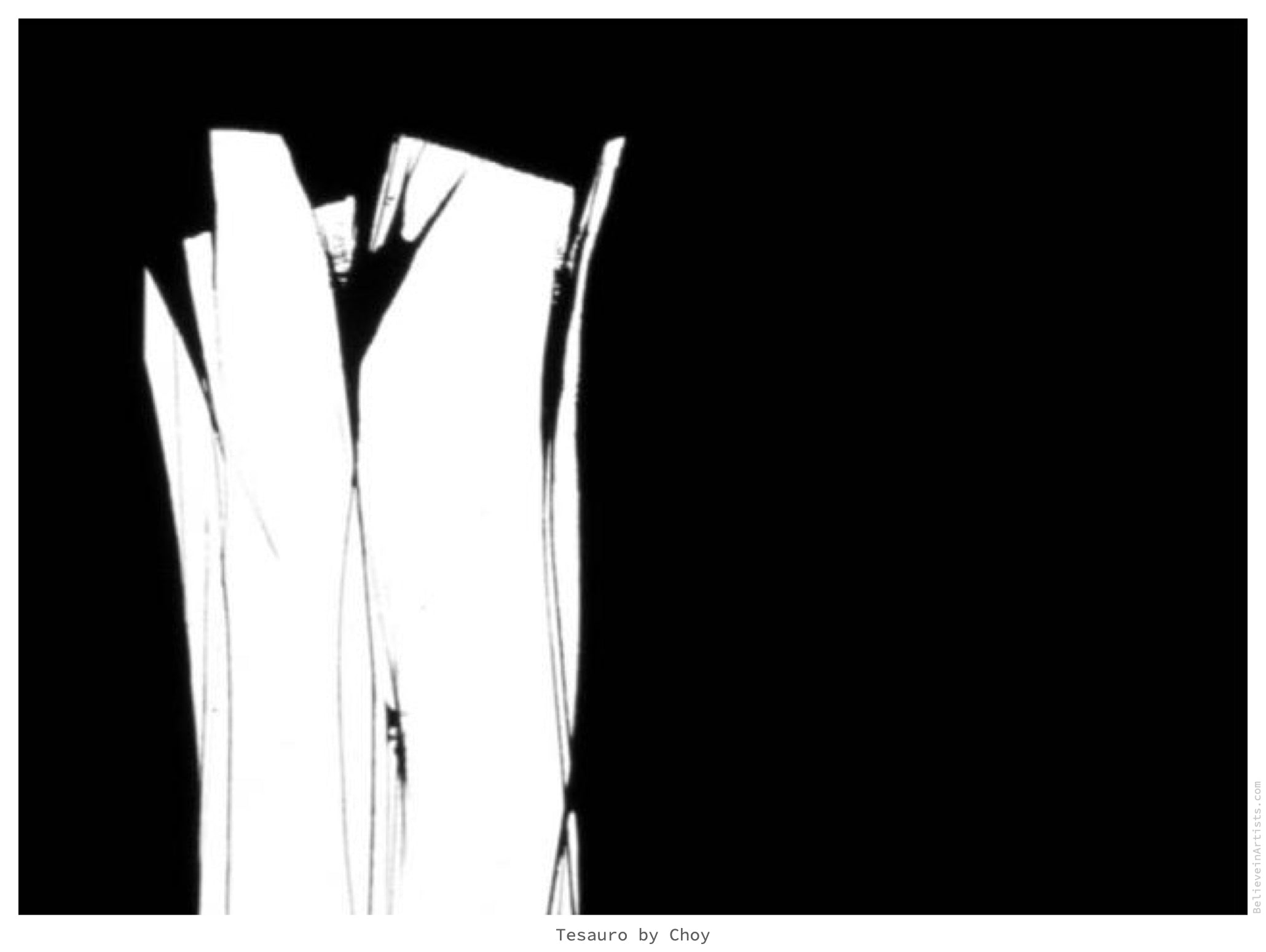
1. “Tesauro”, de la serie “Dibujos conceptuales de arquitectura”, es un dibujo sobre la torre de la biblioteca Casa de las Américas, en La Habana.
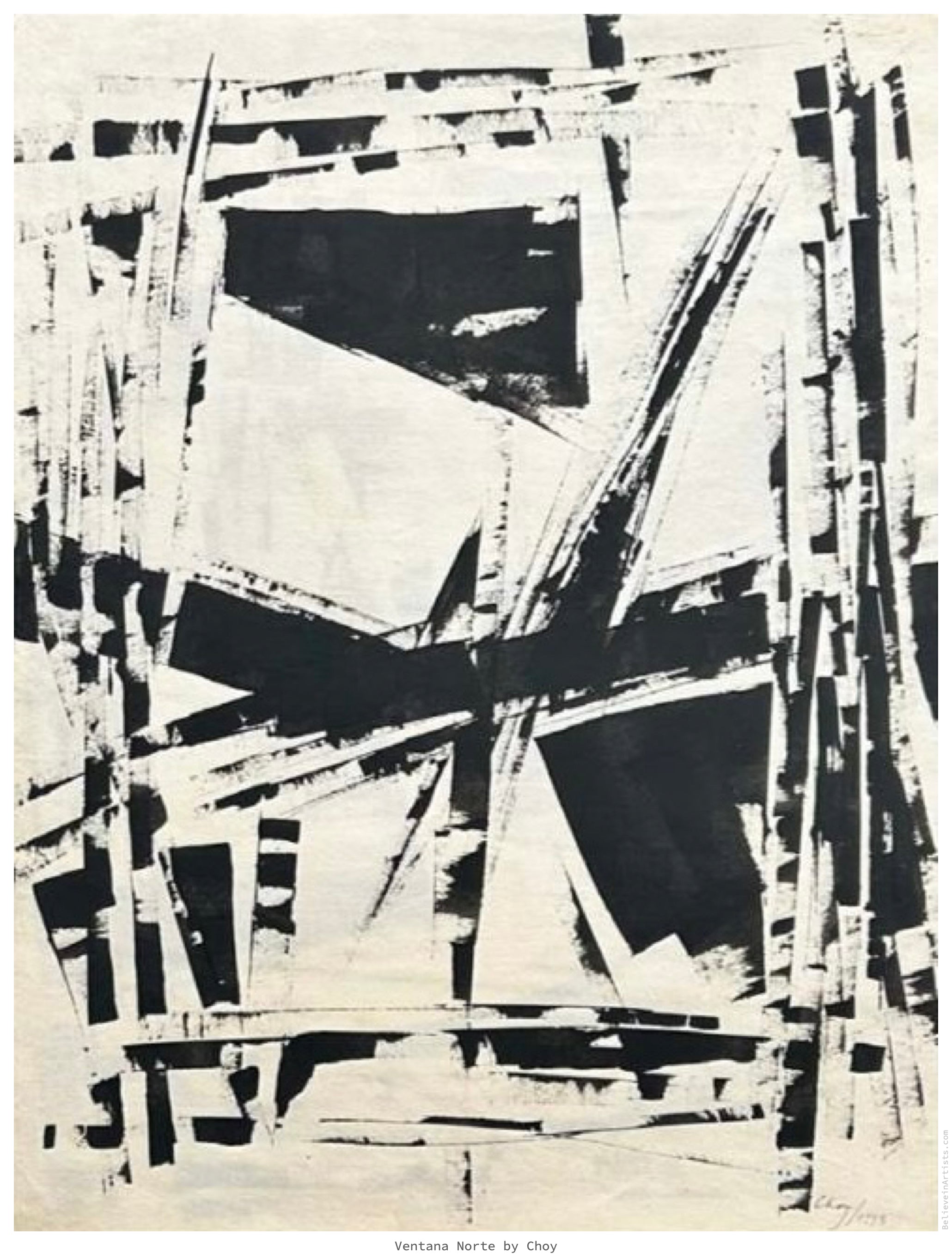
2. “Ventana Norte”, una abstracción que alude también a la arquitectura, es una visión desde un espacio arquitectónico amenazado por la vegetación, espinas y saetas.
3. “La mirada del tiempo”, de la serie “El arte de la espera”.
Me pueden seguir en
artchoy.com y en instagram como @ArtChoy.oficial
Muchas gracias.
My Artist Story
An artist’s story is part of the creator’s identity. In my case, I have a dual identity as both an architect and a painter. For me, these two roles merge into a single creative process. I make no distinction between designing a work of architecture, confronting the complexity of a building, or creating a painting. The creative commitment is the same in both dimensions of the visual arts.
On one hand, there is intuition, which lies at the heart of the mystery of artistic creation. I firmly believe intuition is one of the creator’s most important human qualities. On the other hand, I also believe that ideas and thought are the generative seed of every work. Whether it is a painting, a building, or a city, the underlying concept is essential. If there is no concept or thought behind a work that allows it to transcend itself, it cannot truly endure as a work of art.
The stories of other artists are equally important in nourishing a creator’s life and imagination. Personally, in modern Cuban art, I would highlight Wifredo Lam, a man of universal stature. Had he painted nothing but The Jungle, now housed at the Museum of Modern Art (MoMA) in New York, that alone would have secured his place in history.
Another Cuban artist who deeply moves, inspires, and motivates me is Antonia Eiriz, an Expressionist painter from the early years of the Cuban Revolution. Her body of work is extraordinary, and even if she had created only The Annunciation, she would still deserve a place in the pantheon of Cuban art.
Internationally, I greatly admire—almost to the point of being a devoted fan—Edvard Munch. His paintings move me, affect me profoundly, and elevate my spirit. Even if he had painted only The Scream, I believe he would still hold a more than deserved place in the history of modern art.
And, of course, one cannot fail to mention Picasso, so extraordinarily versatile—a Spaniard whose work transcended the globe. If I had to choose just one of his works, I would say Guernica alone would be enough to establish him as one of the most important painters of the twentieth century.
SPIKY by Choy
This collection is truly inspiring. Thorns surround and protect flowers, and they also protect certain animals, such as hedgehogs, from predators. Jewelry, too, can be born among thorns. That is why I found Sergio Andrés’s collection, created together with his daughter Anaïs, so poetic and evocative. It inspired me to create two pieces for the collection.
The first piece, which I created almost in a single sitting, is titled “Flowers Among Thorns.” It is connected to the poem “To My Mother” by José Martí, written when he was seventeen years old while serving a sentence in the San Lázaro quarries in Havana. The poem reads:
Look at me, Mother,
and for your love
do not weep. If, a slave
to my age
and my convictions,
I filled your martyr’s heart
with thorns,
remember that
among thorns
flowers bloom.
In this work, jewelry is born “among thorns,” guarded by them as flowers are. I imagine these designs as rings, earrings, brooches, small piercings, and more.
The second work is titled “Sunflower of Gems.” In it, a sunflower and its slender stem have been transformed into a nest of jewelry, protected by elegant thorns surrounding them. It is a nod—a visual homage—to Van Gogh’s sunflowers, which could even inspire a Spiky subseries that I would call “Thorns and Sunflowers.”
I would like to share three works that are not part of this collection:
- “Thesaurus,” from the series Conceptual Architectural Drawings, a drawing based on the library tower of Casa de las Américas in Havana.
- “North Window,” an abstract work that also alludes to architecture. It presents a view from an architectural space threatened by vegetation, thorns, and arrows.
- “The Gaze of Time,” from the series The Art of Waiting.
You can follow my work at artchoy.com and on Instagram at @ArtChoy.
Thank you very much.
